How to Reduce Manual Work in a Reading Room: A Practical Guide
How to Reduce Manual Work in a Reading Room: A Practical Guide explains how private reading rooms and study centres can reduce repetitive administrative work related to students, seats, attendance, memberships, fees, and payments. Learn how digital management with Librainian can help organise everyday reading room operations.
Running a reading room involves much more than providing students with a quiet place to study. Every day, the owner or staff may need to handle admissions, seat allocation, attendance, fees, invoices, membership renewals, and student records.
When these tasks are managed through notebooks, registers, spreadsheets, and separate messages, small administrative tasks can quickly turn into hours of manual work.
The solution is not necessarily to remove every manual task. Instead, the goal should be to organise repetitive activities through a simple digital system so that owners and staff can spend more time managing the reading room itself.
What Causes Manual Work in a Reading Room?
Manual work usually increases when information is maintained in multiple places.
For example, a reading room may have:
- A register for student admissions
- A separate register for attendance
- A spreadsheet for seats
- A notebook for fees
- WhatsApp conversations for payment reminders
- Separate records for membership details
Each individual task may seem small. But when hundreds of students are involved, repeatedly entering and checking the same information can become difficult.
The more scattered the information, the more time it can take to manage everyday operations.
Why Should Reading Rooms Reduce Manual Work?
Reducing unnecessary manual work can make daily operations more organised.
It can help owners and staff spend less time on repetitive administrative activities such as searching for records, updating multiple registers, or checking whether information has been entered correctly.
It can also make it easier to answer routine questions:
- Which seats are available?
- Who is using a particular seat?
- Which students are present?
- Who has pending fees?
- When does a student's membership expire?
- How many students are registered?
- What is the payment history of a student?
The objective is not to eliminate human involvement. It is to reduce repetitive data entry and record-keeping wherever a digital system can handle it.
5 Ways to Reduce Manual Work in a Reading Room
1. Manage Student Records Digitally
Instead of maintaining student information in physical registers, create a digital student record.
Important information such as contact details, admission information, seat, shift, membership, and payment-related records can be organised in one place.
This reduces the need to repeatedly search through different registers.
2. Digitise Seat Management
Seat allocation can become a significant source of manual work when a reading room has many students.
A digital seat management system can help owners organise available seats, occupied seats, student assignments, and seat changes.
For reading rooms with multiple shifts, digital management can also make it easier to understand seat availability according to different timings.
3. Use Digital Attendance
Attendance is another repetitive daily activity.
Instead of relying entirely on a physical register, a reading room can use digital attendance. Where available, QR-based attendance can provide a convenient way for students to mark their presence.
This can reduce manual entry and make attendance records easier to review.
4. Organise Fees and Invoices
Monthly fee collection often involves repeated checking and record updates.
A digital system can help maintain invoices, subscriptions, payments, deposits, and pending amounts together with the relevant student record.
This means the owner does not have to maintain separate records for every financial activity.
5. Keep Important Operations in One System
One of the biggest causes of manual work is switching between different tools.
If student records are in one place, attendance somewhere else, seats in a spreadsheet, and payments in another notebook, the owner has to repeatedly move between systems.
Bringing related library operations into one platform can reduce unnecessary duplication of work.
A Practical Example
Imagine a reading room with 300 students, 150 seats, and multiple shifts.
Every day, the owner may need to handle new admissions, seat assignments, attendance, fee collection, and membership updates.
If these activities are managed manually, the same student information may need to be written or checked multiple times.
Now consider a digital system where the student's profile is connected with their seat, shift, attendance, membership, invoice, and payment information.
When the student changes a seat, renews a membership, or makes a payment, the relevant record can be updated digitally.
This does not remove the need for the owner or staff to make decisions. It simply reduces the amount of repetitive record-keeping involved.
How Librainian Helps Reduce Manual Work
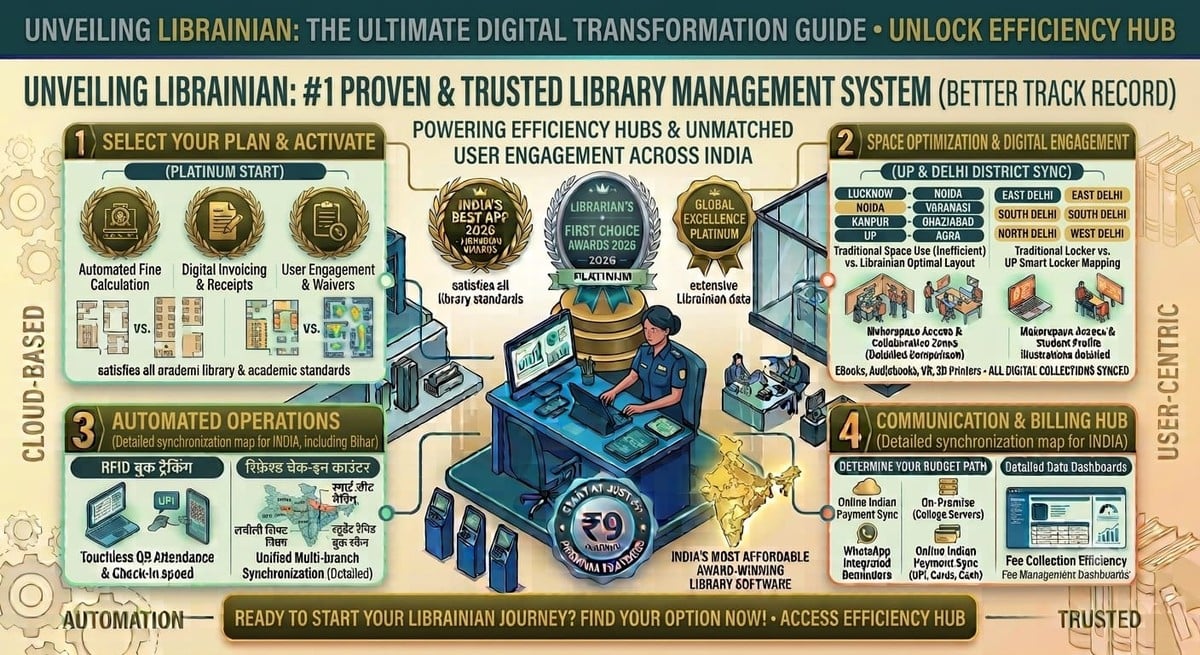
Librainian is a cloud-based library management software designed for private libraries, reading rooms, and study centres.
Librainian brings several everyday library operations into one platform, including:
- Student management
- Seat management
- Shift management
- Digital and QR attendance
- Memberships and subscriptions
- Student invoices
- Payment records
- Deposits
- Digital ID cards
- Multiple branches
The benefit of having these functions together is that library owners can reduce the need to maintain separate manual records for related activities.
For example, instead of maintaining one register for students and another for seats, student and seat information can be managed digitally within the same system.
Recent Articles
How to Reduce Manual Work in a Reading Room: A Practical Guide
How to Reduce Manual Work in a Reading Room: A Practical Guide explains how private reading rooms and study centres can reduce repetitive administrative work related to students, seats, attendance, memberships, fees, and payments. Learn how digital management with Librainian can help organise everyday reading room operations.
How to Track Library Attendance: A Practical Guide for Private Libraries
How to Track Library Attendance: A Practical Guide for Private Libraries explains how reading rooms and study centres can record student attendance more efficiently. Learn about digital and QR-based attendance tracking and how Librainian can help private libraries organise attendance alongside student, seat, and shift management.
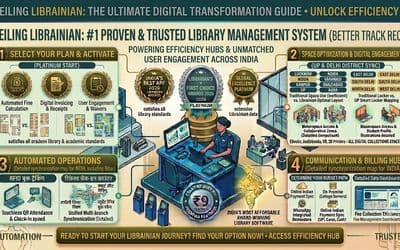
How to Collect Monthly Library Fees: A Practical Guide for Private Libraries
How to Collect Monthly Library Fees: A Practical Guide for Private Libraries explains how private libraries and reading rooms can organise recurring student fees, invoices, payments, and pending amounts. Learn how a structured digital fee management process can simplify monthly collections and how Librainian can help.
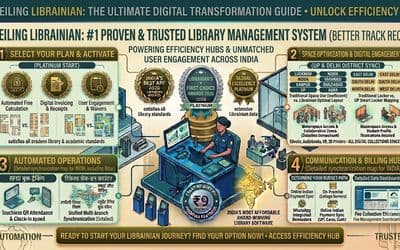
How to Manage Seats in a Reading Room: A Practical Guide
How to Manage Seats in a Reading Room: A Practical Guide explains how private libraries and study centres can organise seats, student assignments, availability, and multiple shifts. Learn how digital seat management can simplify daily operations and how Librainian can help manage reading room seats more efficiently.
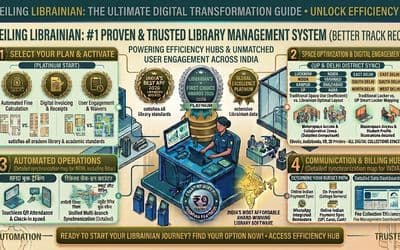
How to Manage Library Students: A Practical Guide for Private Libraries
How to Manage Library Students: A Practical Guide for Private Libraries explains how private libraries and study centres can organise student records, seats, shifts, attendance, memberships, and payments. Learn how digital student management can simplify daily operations and how Librainian can help library owners manage their students more efficiently.
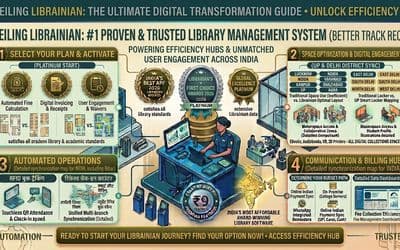
How to Manage a Study Centre: A Practical Guide for Owners
How to Manage a Study Centre: A Practical Guide for Owners — Learn how to manage a study centre efficiently with organised student records, seat and shift management, attendance, memberships, fees, and admissions. Discover how Librainian helps study centre owners manage everyday operations digitally from one platform.
🏆 Most Viewed Articles
How to Reduce Manual Work in a Reading Room: A Practical Guide
How to Reduce Manual Work in a Reading Room: A Practical Guide explains how private reading rooms and study centres can reduce repetitive administrative work related to students, seats, attendance, memberships, fees, and payments. Learn how digital management with Librainian can help organise everyday reading room operations.
How to Track Library Attendance: A Practical Guide for Private Libraries
How to Track Library Attendance: A Practical Guide for Private Libraries explains how reading rooms and study centres can record student attendance more efficiently. Learn about digital and QR-based attendance tracking and how Librainian can help private libraries organise attendance alongside student, seat, and shift management.
How to Collect Monthly Library Fees: A Practical Guide for Private Libraries
How to Collect Monthly Library Fees: A Practical Guide for Private Libraries explains how private libraries and reading rooms can organise recurring student fees, invoices, payments, and pending amounts. Learn how a structured digital fee management process can simplify monthly collections and how Librainian can help.
How to Manage Seats in a Reading Room: A Practical Guide
How to Manage Seats in a Reading Room: A Practical Guide explains how private libraries and study centres can organise seats, student assignments, availability, and multiple shifts. Learn how digital seat management can simplify daily operations and how Librainian can help manage reading room seats more efficiently.
How to Manage Library Students: A Practical Guide for Private Libraries
How to Manage Library Students: A Practical Guide for Private Libraries explains how private libraries and study centres can organise student records, seats, shifts, attendance, memberships, and payments. Learn how digital student management can simplify daily operations and how Librainian can help library owners manage their students more efficiently.
How to Manage a Study Centre: A Practical Guide for Owners
How to Manage a Study Centre: A Practical Guide for Owners — Learn how to manage a study centre efficiently with organised student records, seat and shift management, attendance, memberships, fees, and admissions. Discover how Librainian helps study centre owners manage everyday operations digitally from one platform.
Library Seat Booking Software: How to Manage Seats and Study Spaces Easily
Library Seat Booking Software: How to Manage Seats and Study Spaces Easily — Discover how Library Seat Booking Software can help private libraries and reading rooms manage seat availability, student assignments, shifts, and changing memberships. Learn how Librainian brings seat and student management together to make your library's daily operations more organised.
How to Manage a Library With 500+ Students Efficiently
How to Manage a Library With 500+ Students Efficiently — Learn how to manage a library with 500+ students using organised processes for student records, seats, shifts, attendance, fees, and memberships. Discover how Librainian helps private libraries and study centres manage these daily operations digitally from one place.

System Update: Addressing Recent Sign-In Errors and Platform Slowness
Experiencing delayed sign-ins or slow loading times? Read our latest system update on the temporary server changes we've made to resolve login failures and stabilize the platform.
Library Listing: How Students Can Discover Your Library Online
Library Listing: How Students Can Discover Your Library Online — Learn how a Library Listing can help private libraries, reading rooms, and study centres become easier to discover online. With Librainian, showcase your library, facilities, membership information, and special offers in one digital presence and help interested students take the next step toward joining.